

Southwest Wedding Style: How to Design an Event That Feels Rooted in Place
There's a reason couples travel from across the country — and around the world — to get married in the Southwest. It's not just the scenery, though the scenery is extraordinary. It's the feeling. The way the light falls differently here. The way the landscape has a personality that's impossible to replicate anywhere else. Red rock formations at golden hour. Desert sage after rain. The vast, open sky that makes every outdoor moment feel cinematic.
The most memorable Southwest weddings aren't the ones that happen to take place in the desert — they're the ones that feel like the desert. Where every design decision, from the furniture to the florals to the color palette, is in conversation with the landscape rather than competing with it.
Here's how to design an event that feels genuinely, beautifully rooted in place.
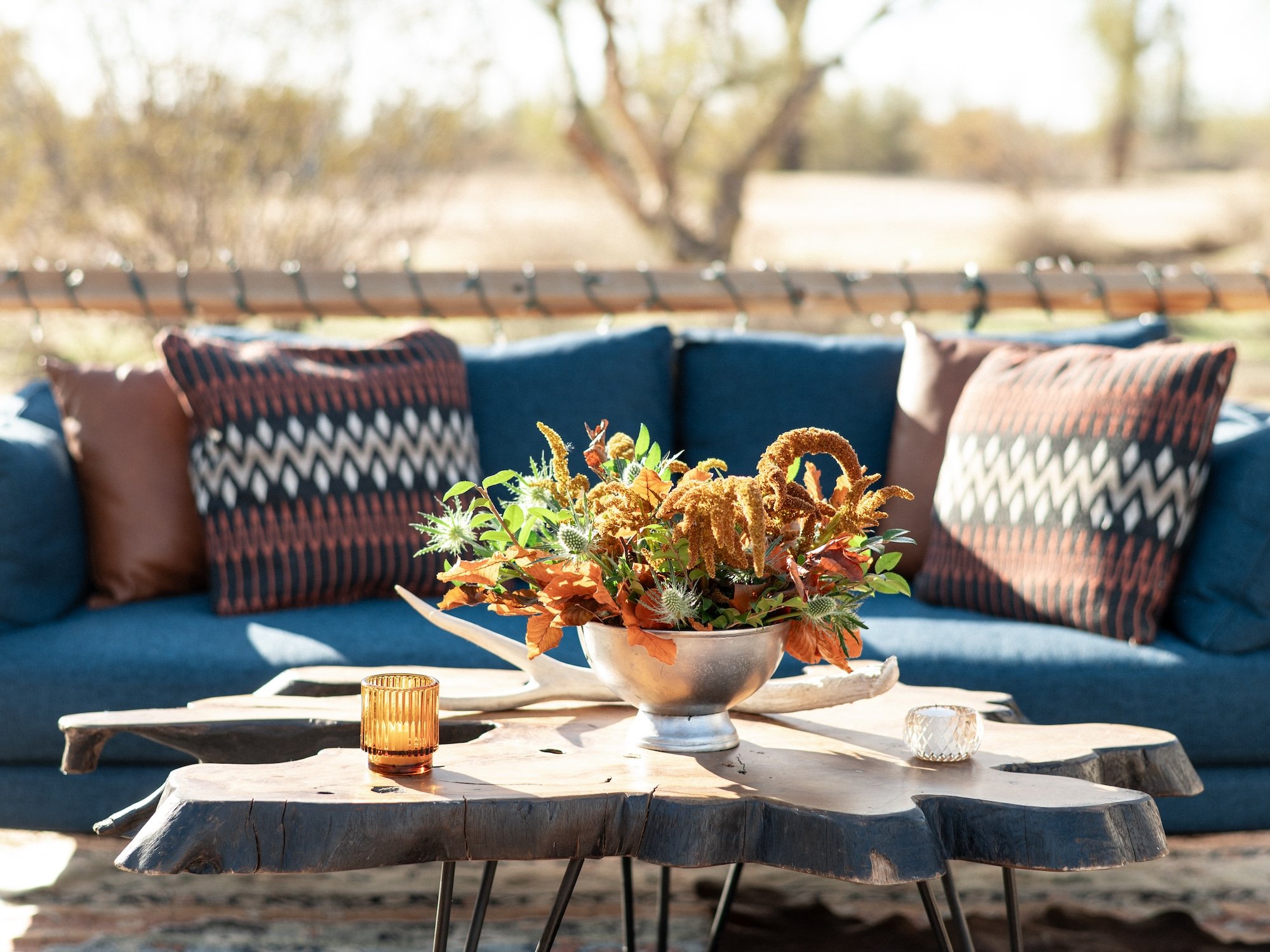
Photography: Ashley M Brown
Start With the Landscape, Not the Trend
The most common mistake in destination wedding design is treating the location as a backdrop rather than a collaborator. Couples fall in love with a venue in Sedona or Santa Fe or the Scottsdale desert, book it for its views, and then bring in a design aesthetic that could have been executed anywhere — all white linens, generic florals, and furniture that has no relationship to the environment around it.
The Southwest deserves more than that. And when you design with the landscape in mind from the very beginning, the result is something that couldn't exist anywhere else — which is exactly what makes it unforgettable.
Before you choose a single piece of furniture or a single bloom, spend time with the space. What are the dominant colors? What textures does the landscape offer? What's the quality of the light at the time of day your event will take place? The answers to those questions should inform every decision that follows.
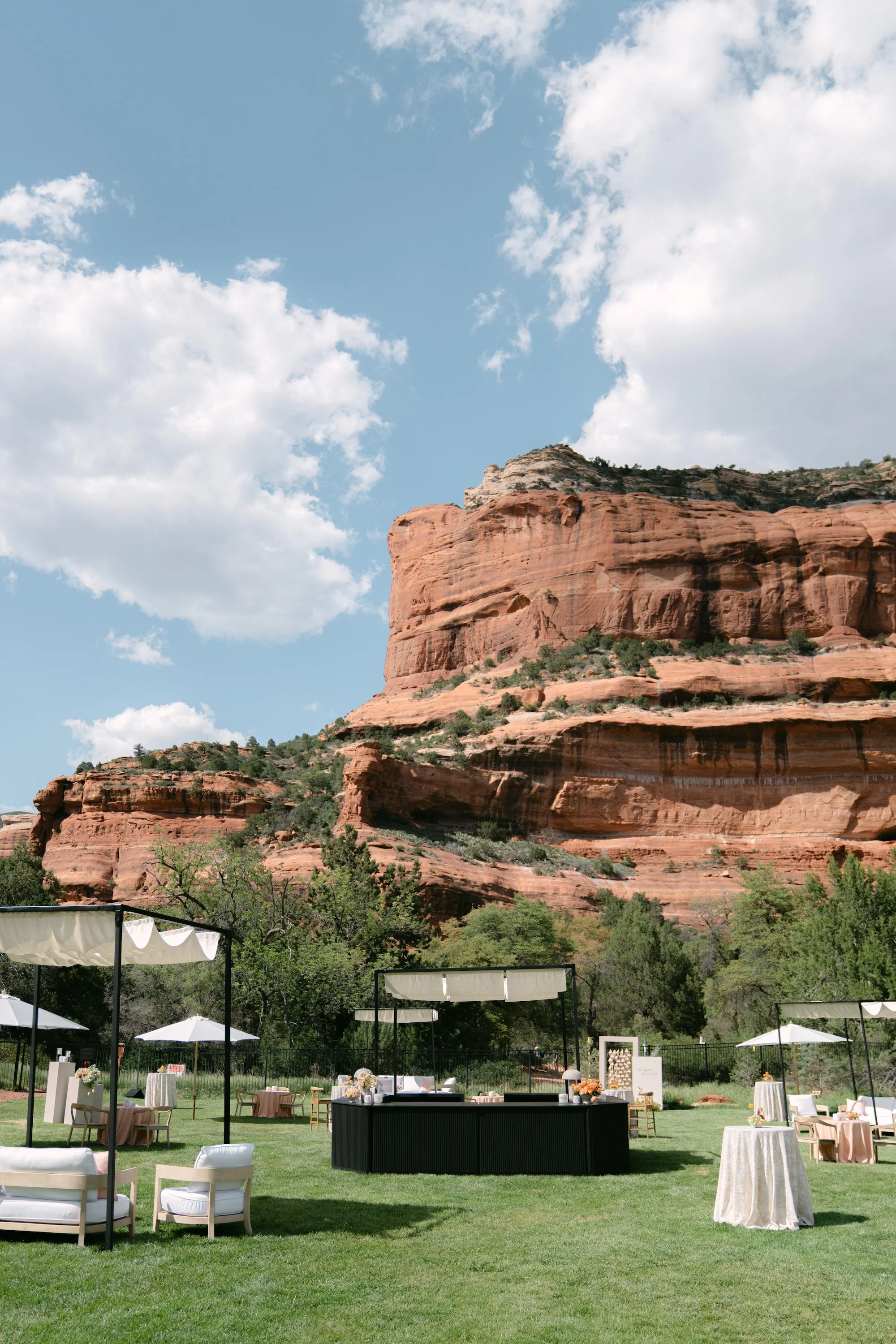
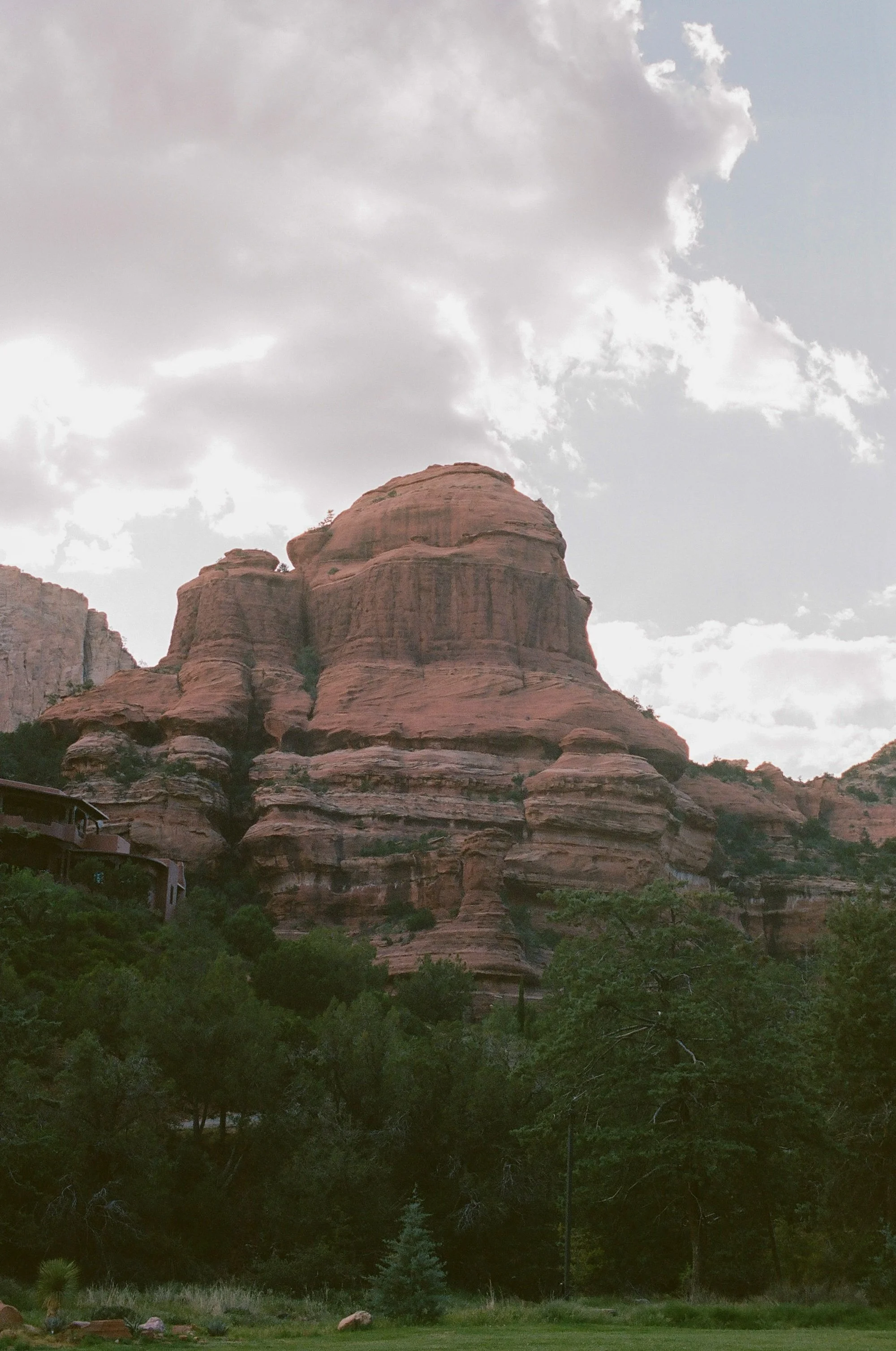
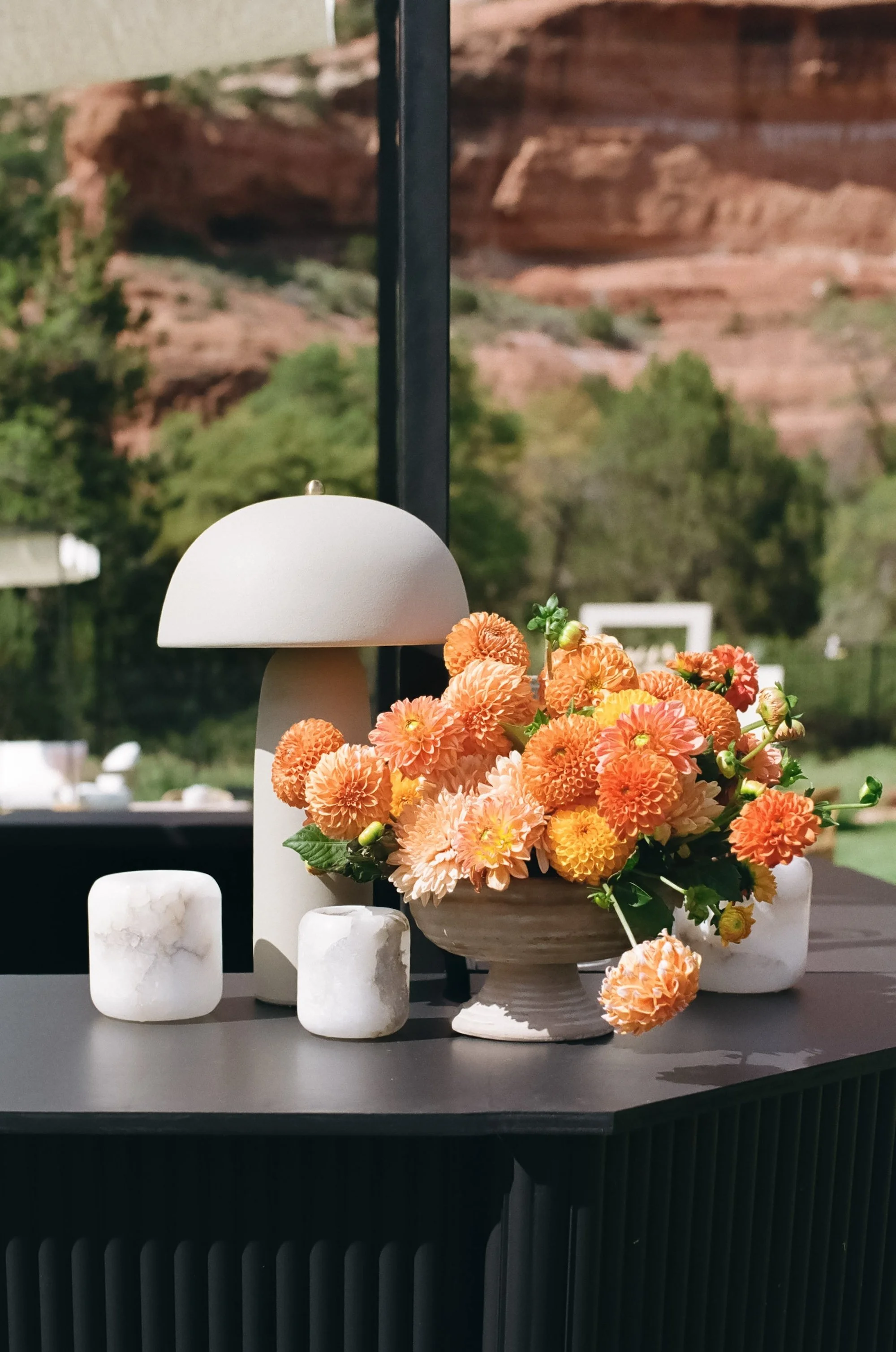
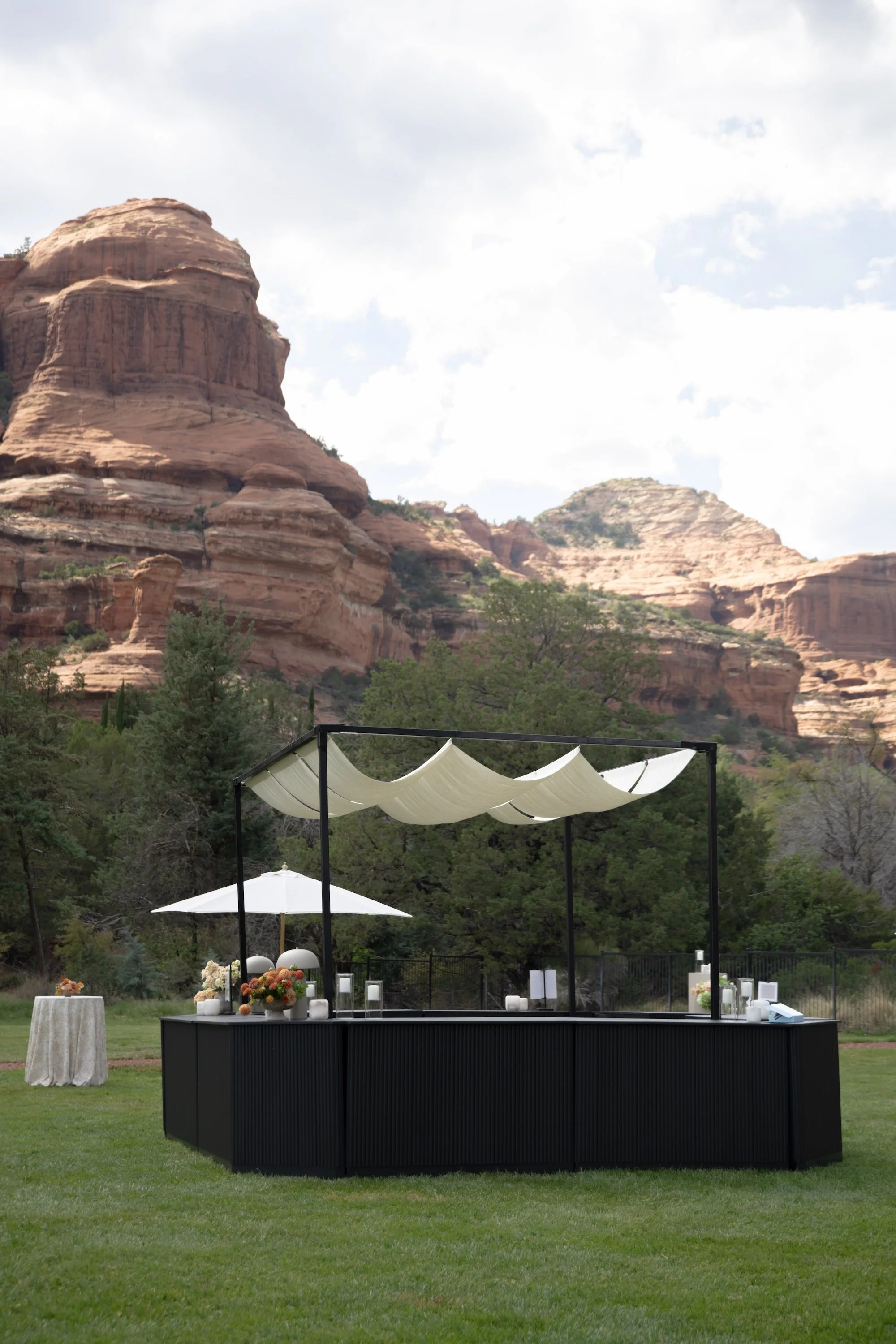
Photography: Emily Bridgman
Embrace the Southwest Color Palette
The Southwest has one of the richest natural color palettes of any region in the world — and it shifts dramatically depending on the season, the time of day, and the specific landscape you're working with.
The desert at midday offers warm terracottas, dusty sages, and sun-bleached creams. At golden hour, those same tones deepen into burnt amber, copper, and rich bordeaux. After a summer storm, the landscape turns an almost impossibly saturated green. In the high desert of northern Arizona or New Mexico, the palette shifts toward cooler blues, grays, and the particular rust-red of ancient rock formations.
The best Southwest wedding palettes don't try to introduce color so much as amplify what's already there. Cream and linen tones that mirror bleached desert grasses. Deep terracotta that echoes the earth. Sage green that pulls from desert succulents and juniper. Warm brass and copper that catch the afternoon light. These aren't trendy color choices — they're timeless precisely because they belong to the place.
When selecting furniture and rental pieces, look for pieces that carry these tones naturally. Prim's collection includes pieces in camel, terracotta, warm cream, and deep sage — tones that don't fight the landscape but settle into it. The Echo Modular Sofa in terracotta, the Avery Curve Chair in camel, the Draper Sofa in warm linen — these are pieces that feel at home under an Arizona sky in a way that a bright white contemporary sofa simply doesn't.
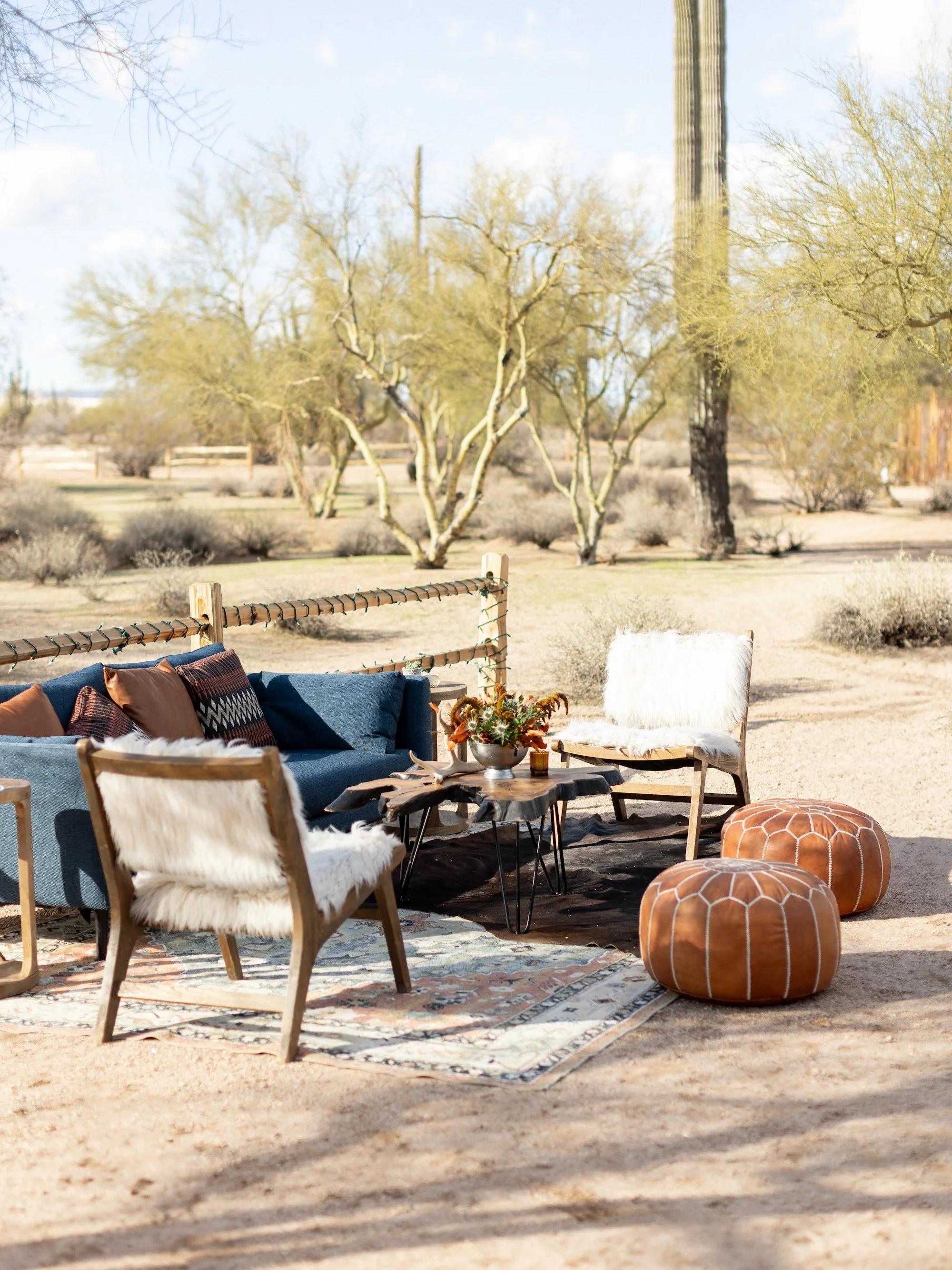
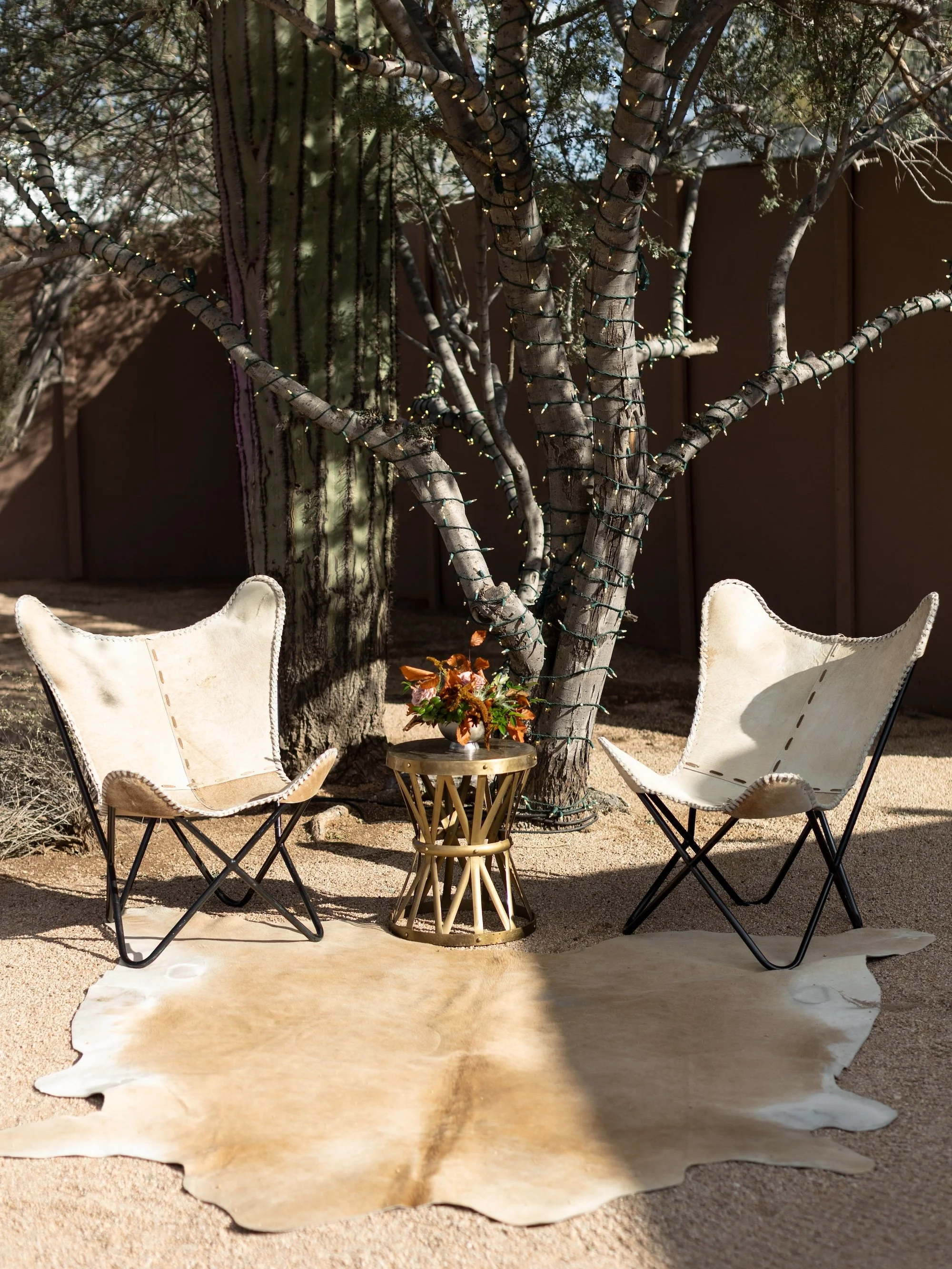
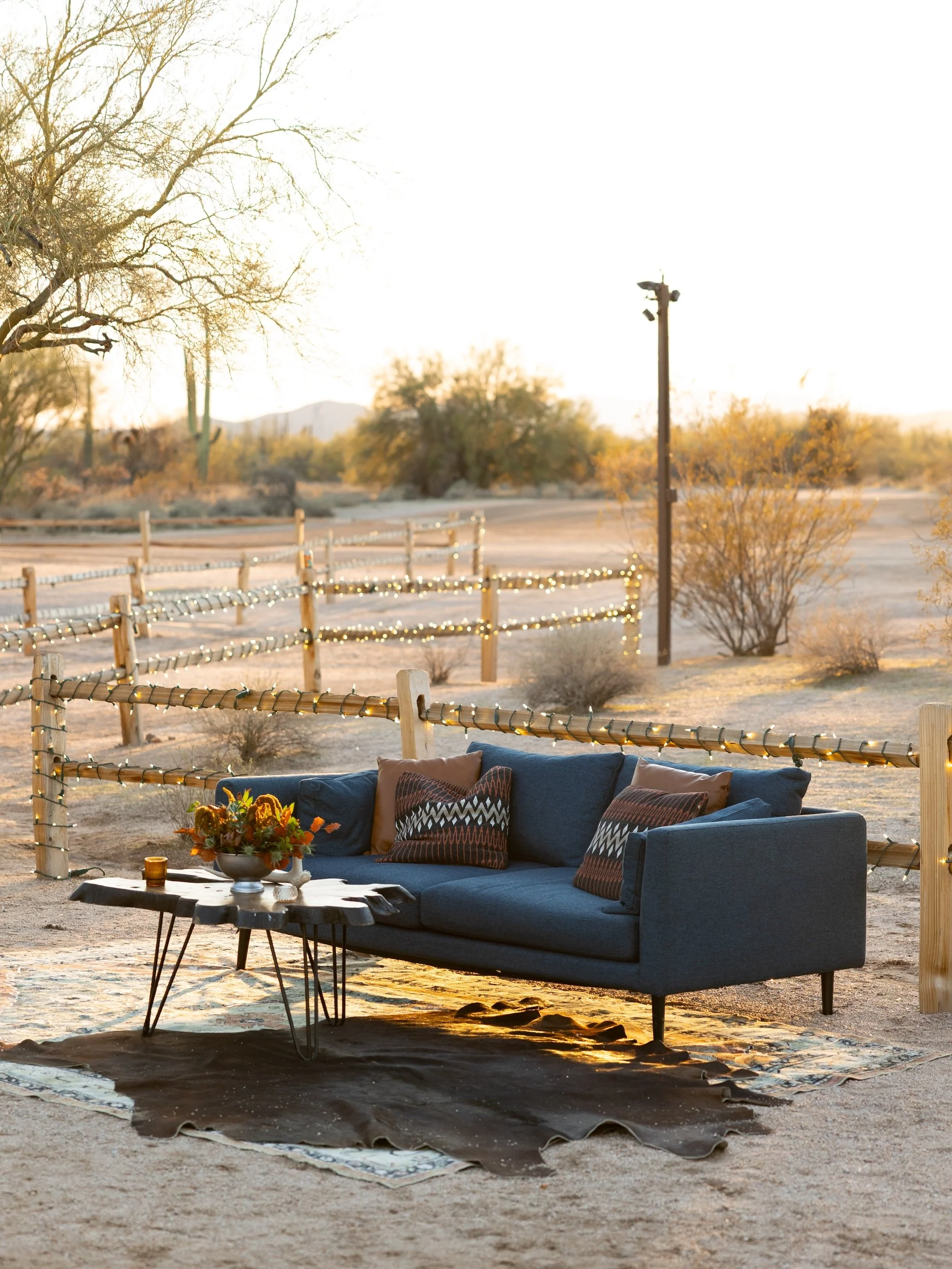
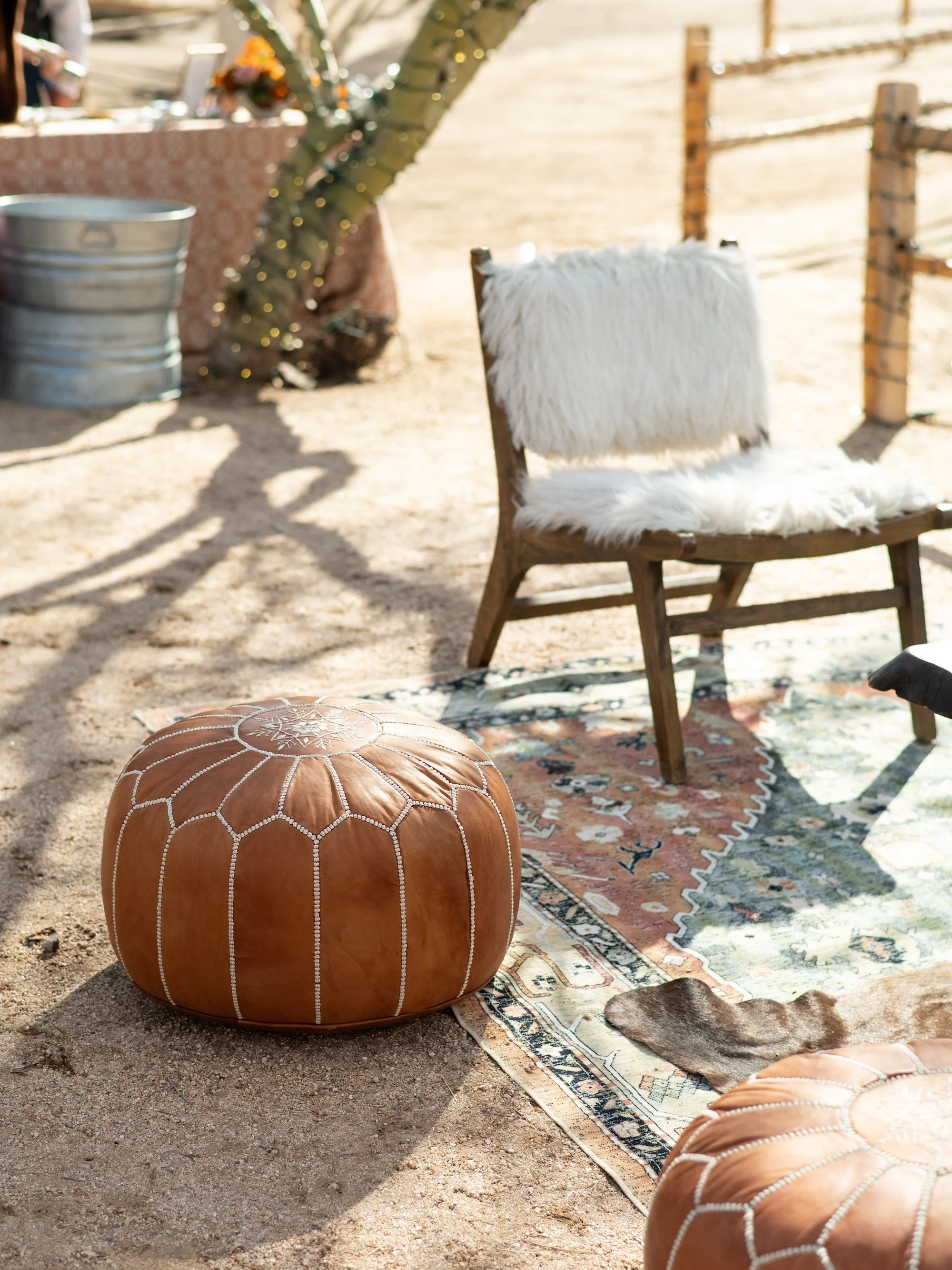
Photography: Ashley M Brown
Choose Materials That Belong to the Region
Color is one dimension of designing with place. Material is another — and in many ways, it's more important.
The Southwest has a deeply rooted material vocabulary: natural wood, leather, woven textiles, stone, raw linen, hammered metal, cowhide, and terracotta. These are the materials that have been used in the region for centuries, and they carry an authenticity that synthetic or overly polished materials can't replicate.
When selecting rental furniture, prioritize natural textures and materials wherever possible. A burl wood side table brings a piece of the desert floor into the room. A leather sofa has a warmth and patina that connects to the region's ranching heritage without being costume-like about it. A woven rug underfoot grounds a lounge area in the same way a kilim or Navajo-inspired textile would — organically, and with visual depth.
Prim's Burl Side Table, cowhide Marlowe Bar, and leather seating pieces are designed around exactly this philosophy — materials that feel native to the Southwest rather than imported from somewhere else. When these pieces appear in a desert setting, they don't look like rentals. They look like they belong.
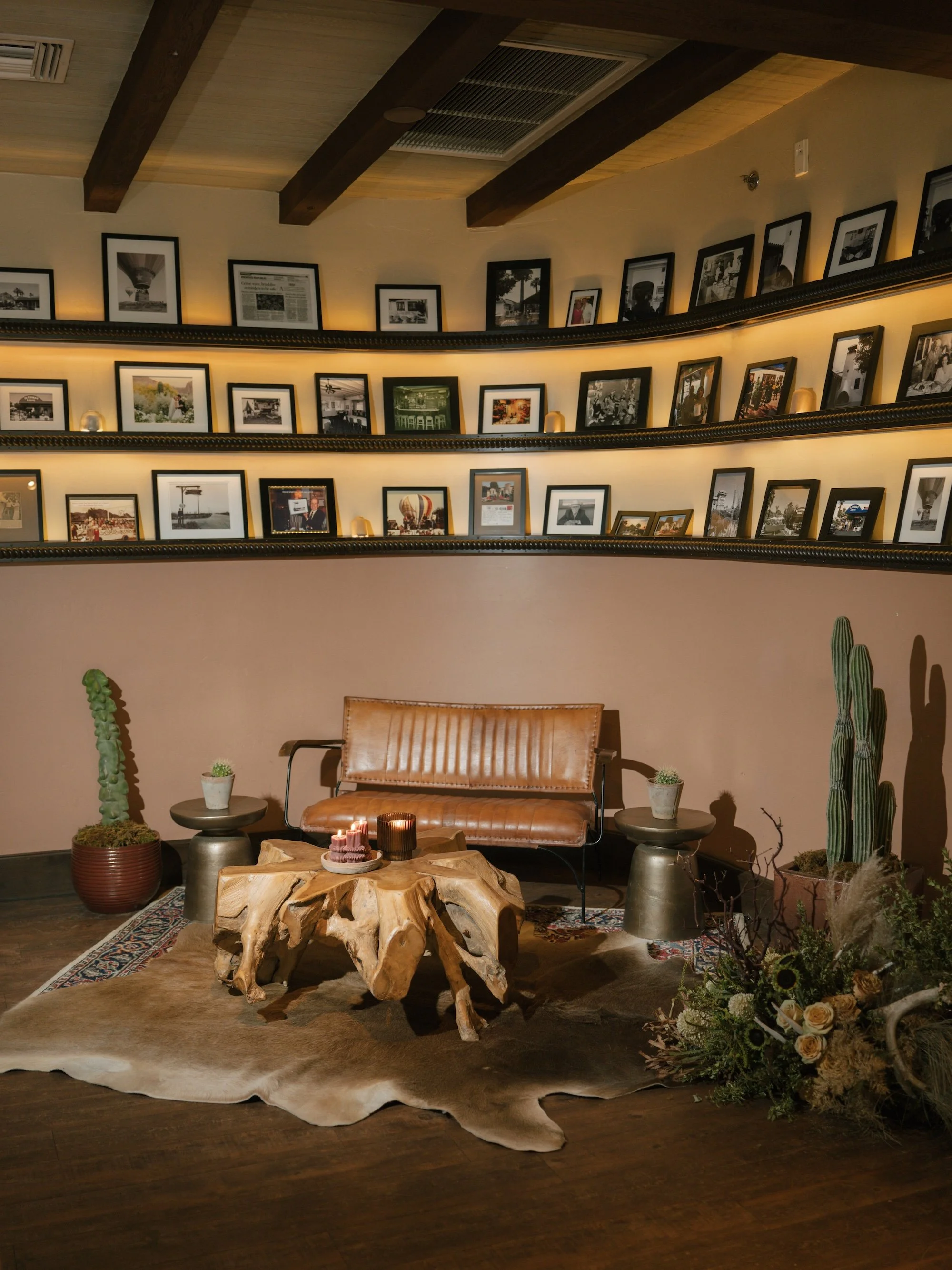
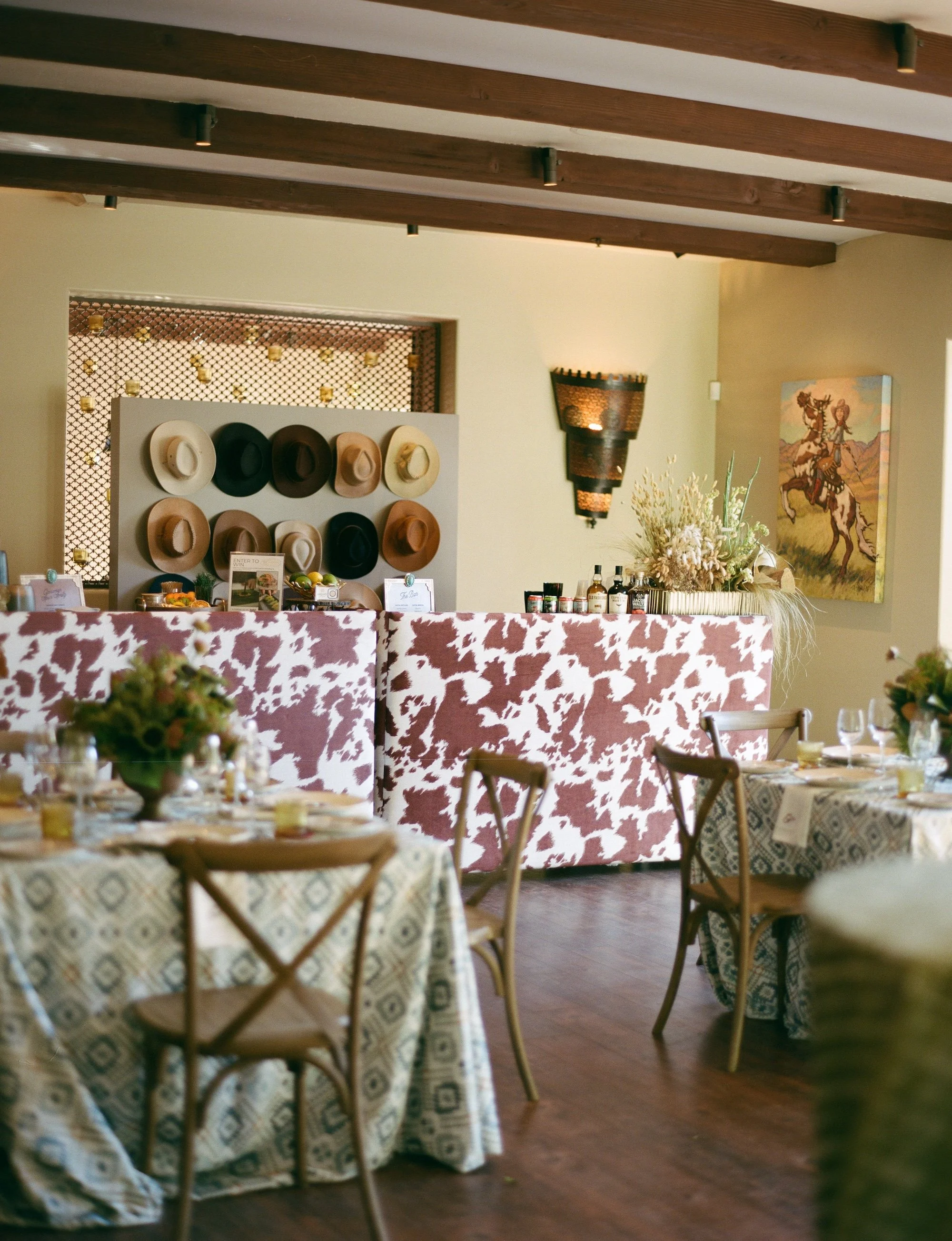
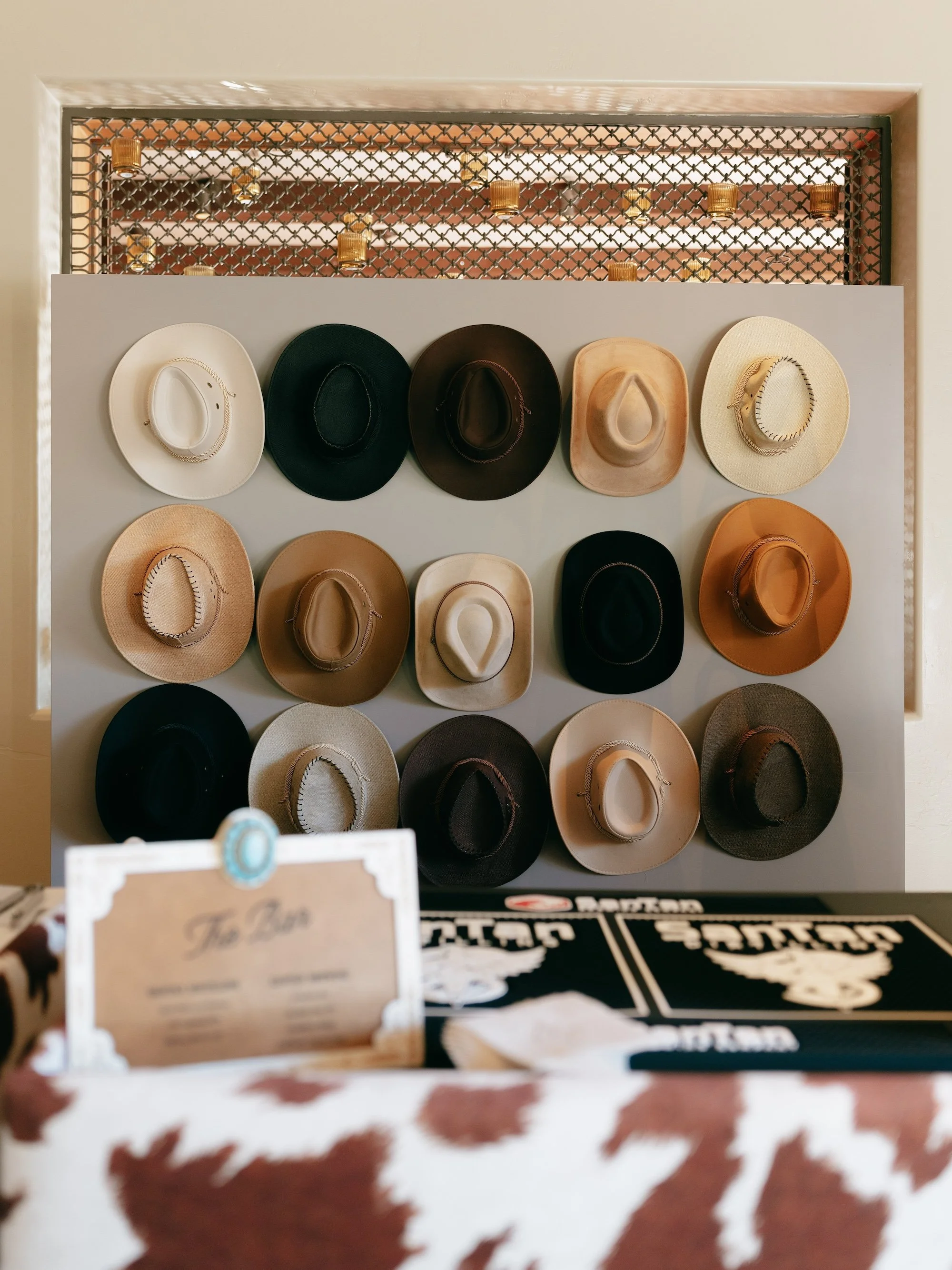
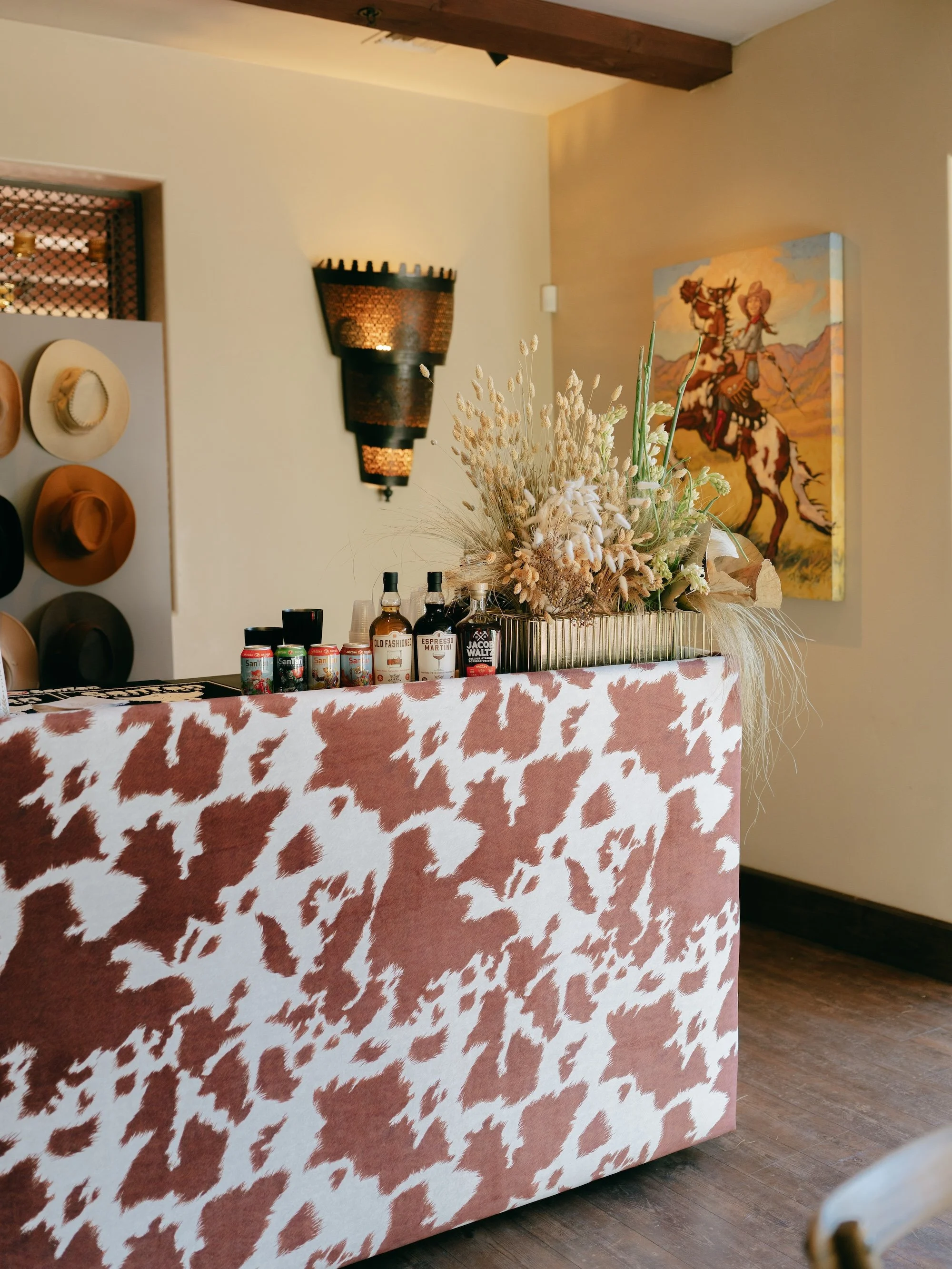
Photos: Emily Bridgman
Let the Architecture Lead
Every Southwest venue has an architectural story — and the best wedding designs listen to it rather than override it.
Adobe walls and exposed beams call for warmth and texture: leather, linen, woven rugs, and aged wood. A modern glass-and-steel venue set against red rocks asks for cleaner lines, but still benefits from natural materials that create a visual bridge between the interior and the landscape beyond. A historic hacienda-style property wants Spanish Colonial references: wrought iron, Talavera tile accents, carved wood, and layered textiles.
The mistake is bringing in a design aesthetic that fights the architecture — sleek acrylic furniture in a rustic adobe space, or heavily ornate Victorian pieces against a minimalist desert backdrop. The most successful Southwest events are the ones where the furniture and décor feel like a natural extension of the venue rather than something installed on top of it.
When working with a planner or rental company, bring photos of your venue's architectural details and ask specifically how the furniture collection can complement — rather than compete with — those elements. A good rental partner will know their inventory well enough to guide you toward pieces that create harmony rather than tension.
Design for the Outdoor-Indoor Flow
One of the defining characteristics of Southwest event design is the relationship between indoor and outdoor spaces. The climate, particularly in the spring and fall, invites a seamless flow between interior and exterior — and the best Southwest weddings take full advantage of it.
This means thinking about how your design translates across environments. A lounge setup on a patio should feel connected to the reception inside. The furniture palette, the textiles, and the accessories should speak the same design language whether guests are inside or out. Nothing breaks the magic of a beautifully designed Southwest event faster than stepping from a thoughtfully decorated indoor space onto a patio that feels like an afterthought.
Lounge seating is particularly powerful in this context. A well-designed outdoor lounge area — with a sofa, a pair of accent chairs, a coffee table, and a rug — creates a destination within the event, a place guests actively seek out and linger in. It extends the footprint of the celebration into the landscape and gives guests a reason to step outside, look up at the sky, and take a breath.
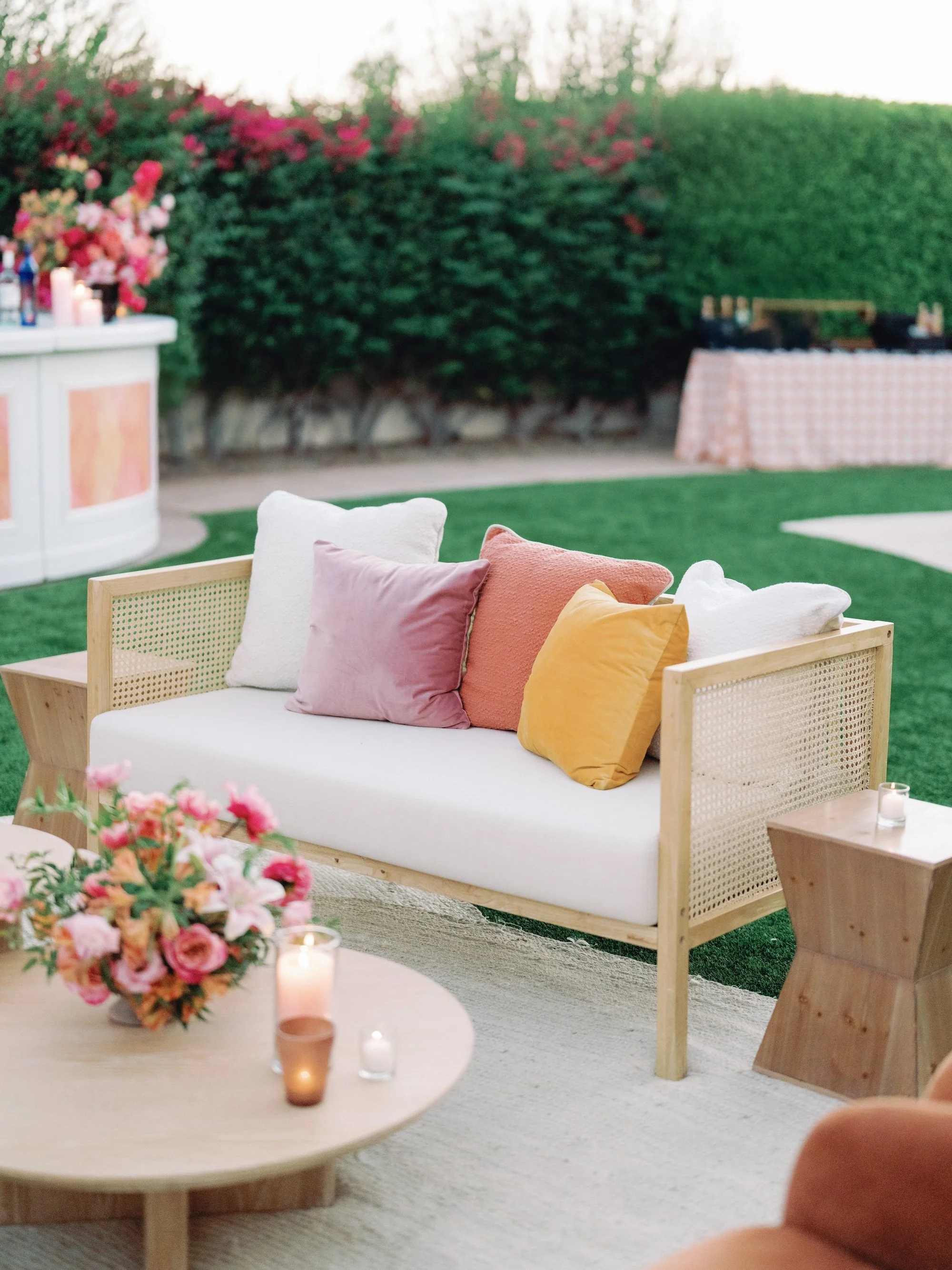
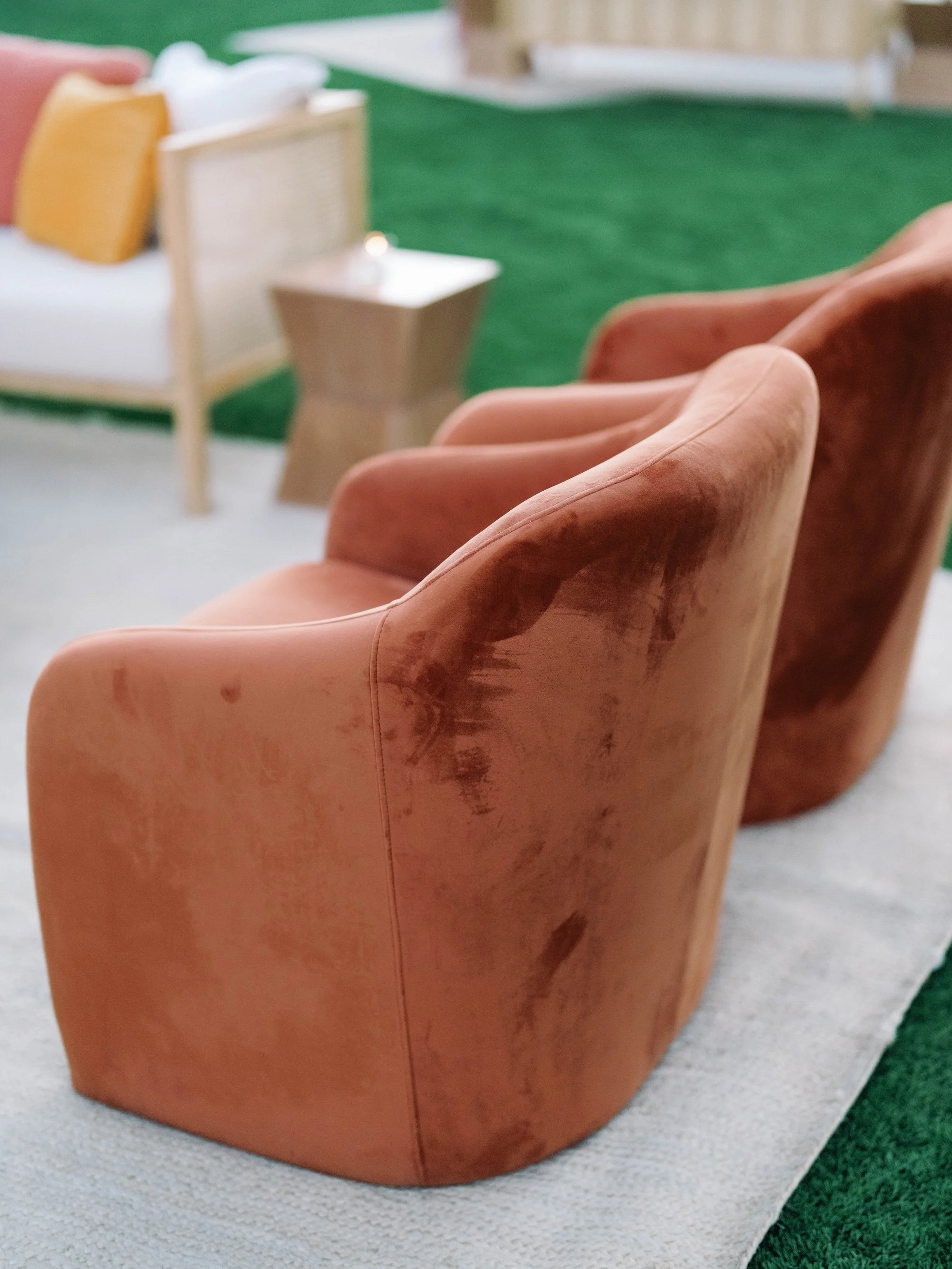
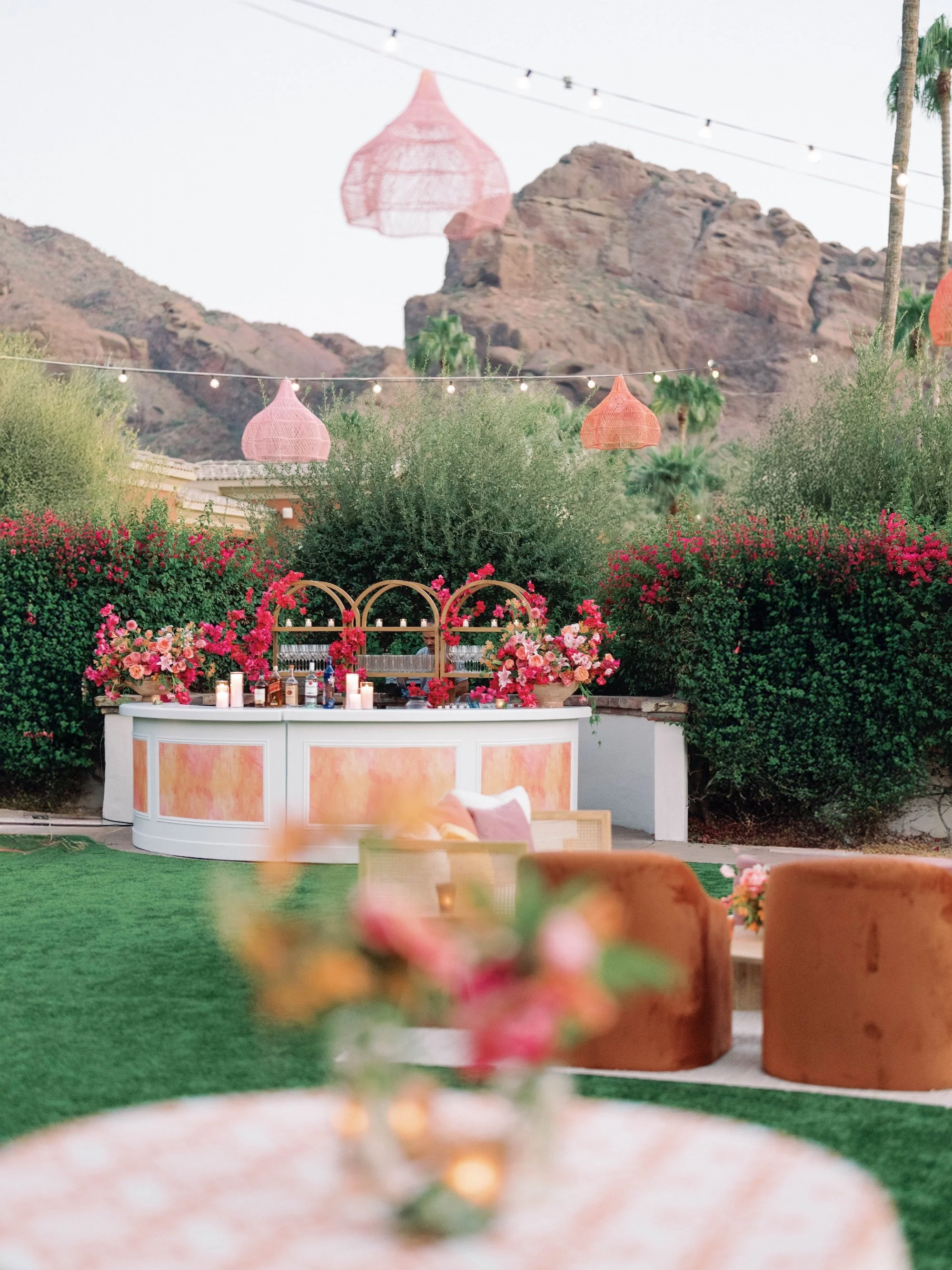
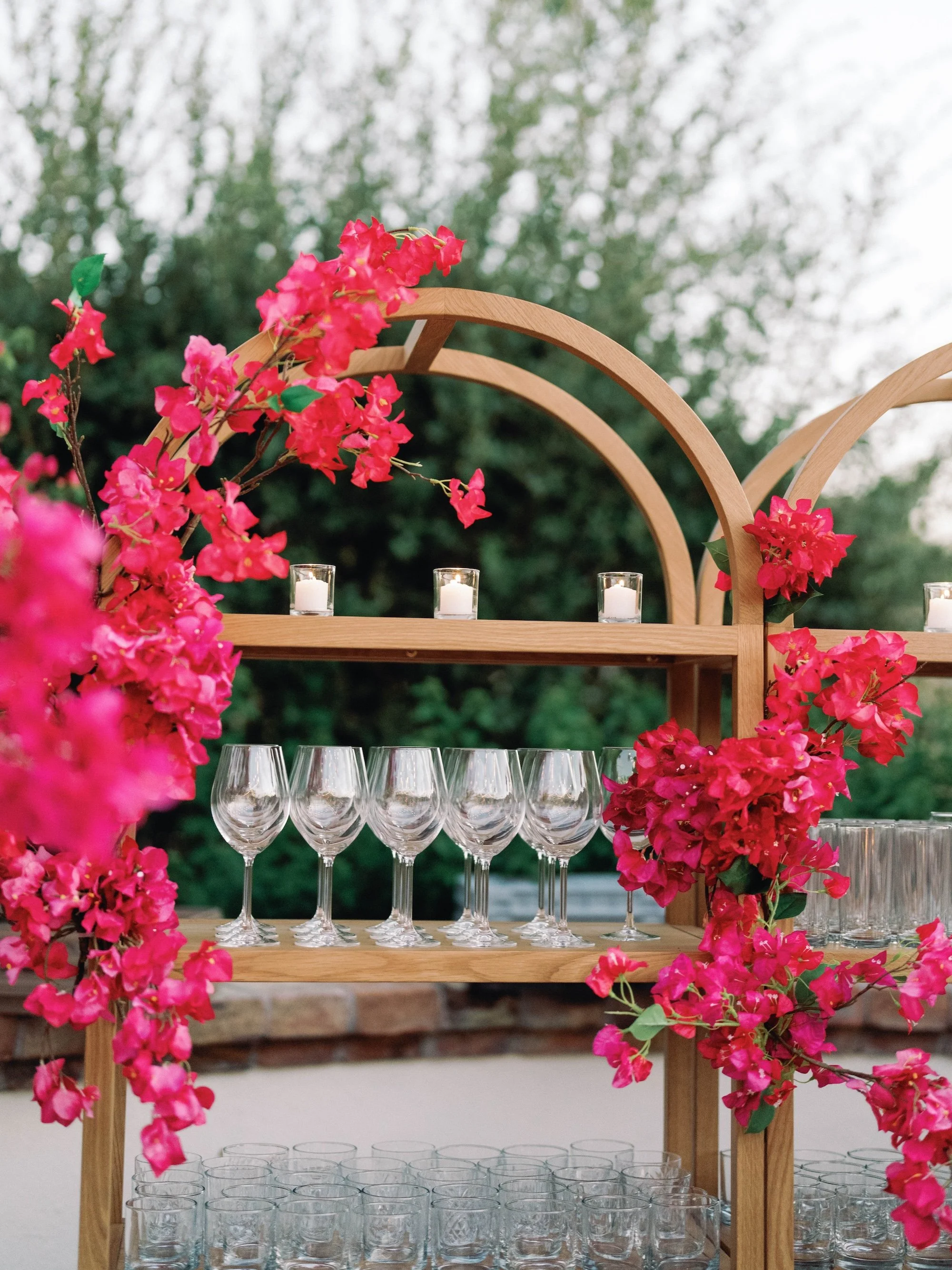
Photography: Elyse Hall
Don't Mistake Literal for Rooted
There's an important distinction between designing an event that feels rooted in the Southwest and designing an event that's themed around the Southwest. The former is sophisticated and timeless. The latter can easily tip into something that feels more like a costume than a celebration.
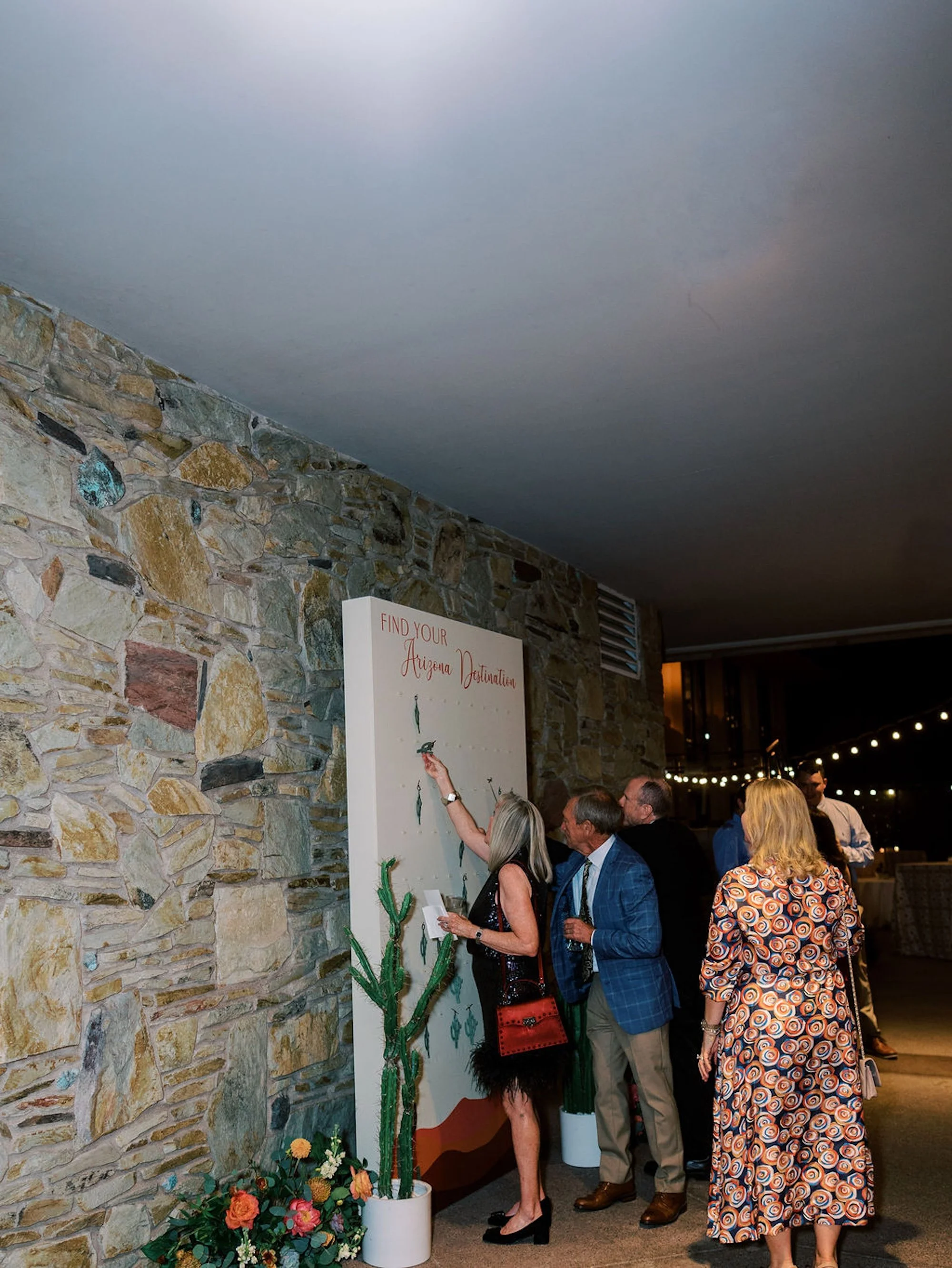
Rooted design is subtle. It's a terracotta linen on the tables rather than a sombrero centerpiece. It's a cowhide rug under the lounge rather than a cactus-shaped bar. It's a palette pulled from the landscape rather than a gift bag stuffed with turquoise jewelry. The Southwest's design vocabulary is rich enough that you never need to be literal — the references can be woven in through texture, tone, material, and proportion rather than through obvious iconography.
The goal is for a guest to walk into your event and feel, without necessarily being able to articulate why, that this celebration could only have happened here. That feeling comes from restraint and intentionality — not from decoration.
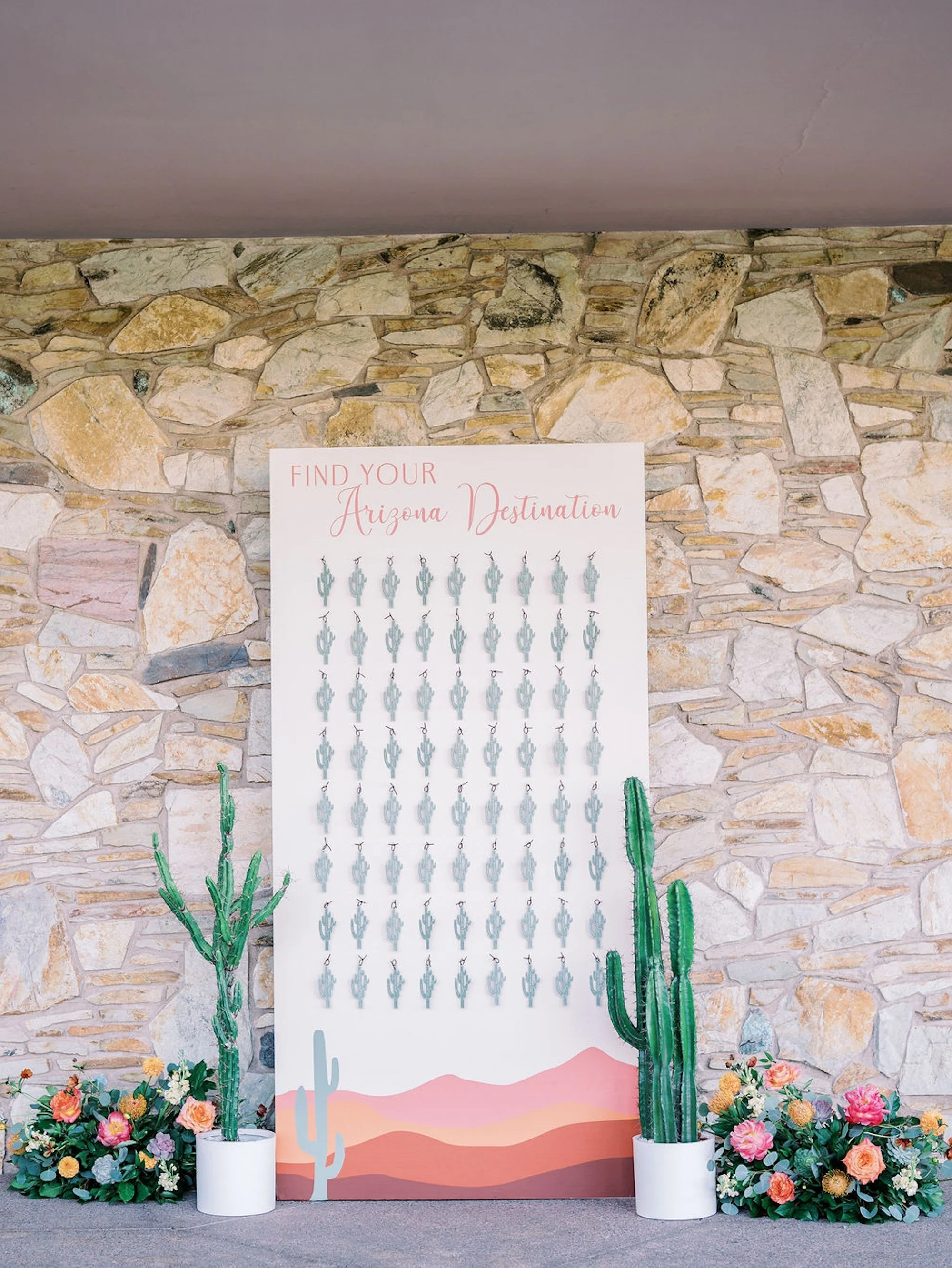
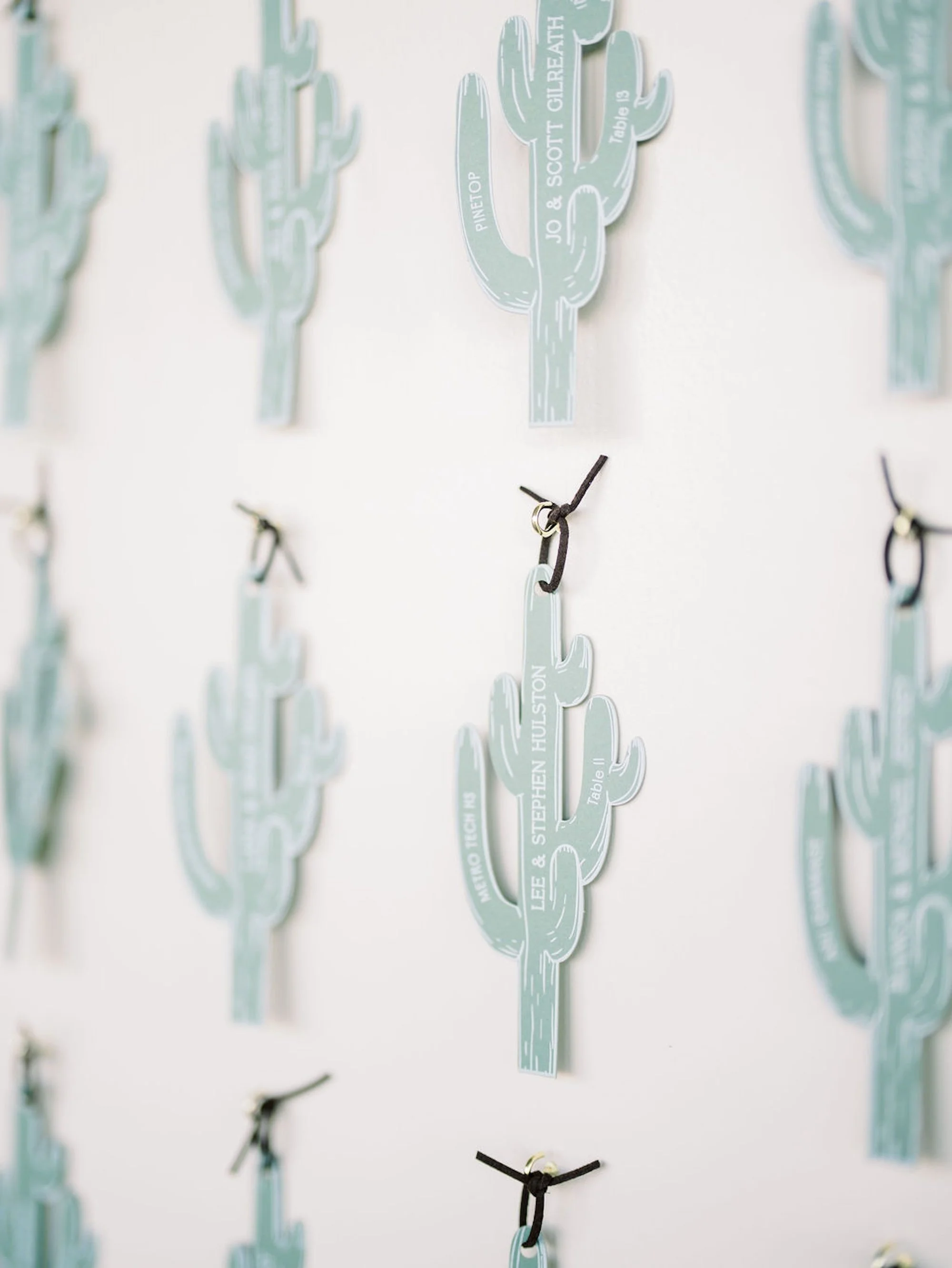
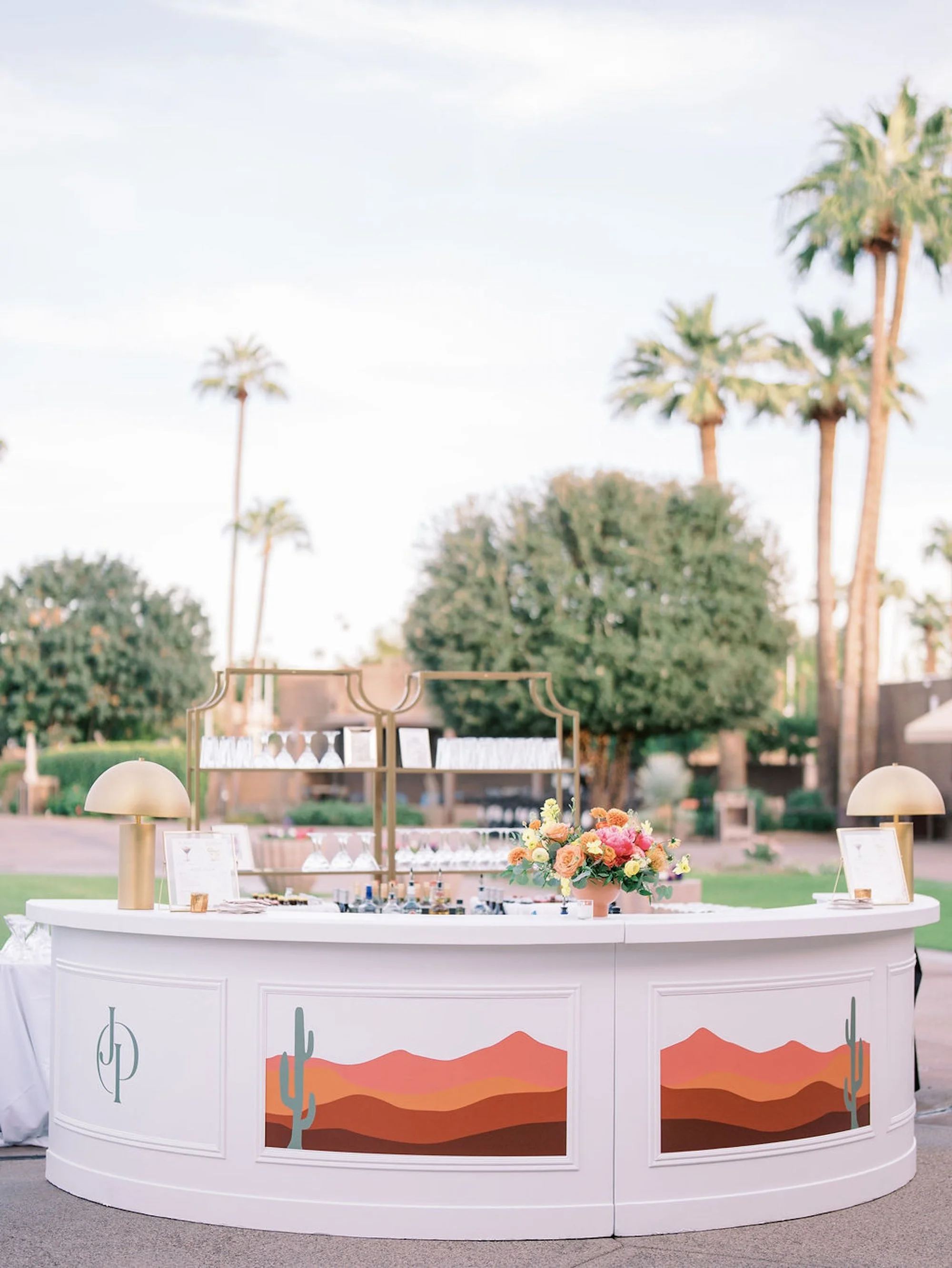
Photos: Mary Claire Photography
Work With Vendors Who Know the Region
Finally — and this one matters more than people realize — work with vendors who have a genuine relationship with the Southwest. Planners who have designed in these landscapes understand how the light changes, which venues have architectural quirks worth designing around, and which local makers and artisans can add a layer of regional authenticity that no out-of-town vendor can replicate.
The same principle applies to your rental company. A specialty rental partner with deep roots in the Southwest will have a collection that reflects the region — pieces selected specifically because they work in desert light, against adobe walls, and beneath open skies. They'll know which textures hold up in outdoor heat, which colors read beautifully at golden hour, and how to configure a lounge that works with the wind rather than against it.
At Prim, we've spent years building a collection around exactly these considerations — pieces that feel native to the Southwest, that travel as beautifully as the region does, and that give every event a sense of place that photographs as well as it feels.
Ready to Design Your Southwest Event?
Whether you're planning a desert ceremony at sunset, a garden reception beneath olive trees, or an intimate dinner under the stars, Prim's collection is built for exactly this landscape. We'd love to help you design an event that feels like nowhere else on earth.
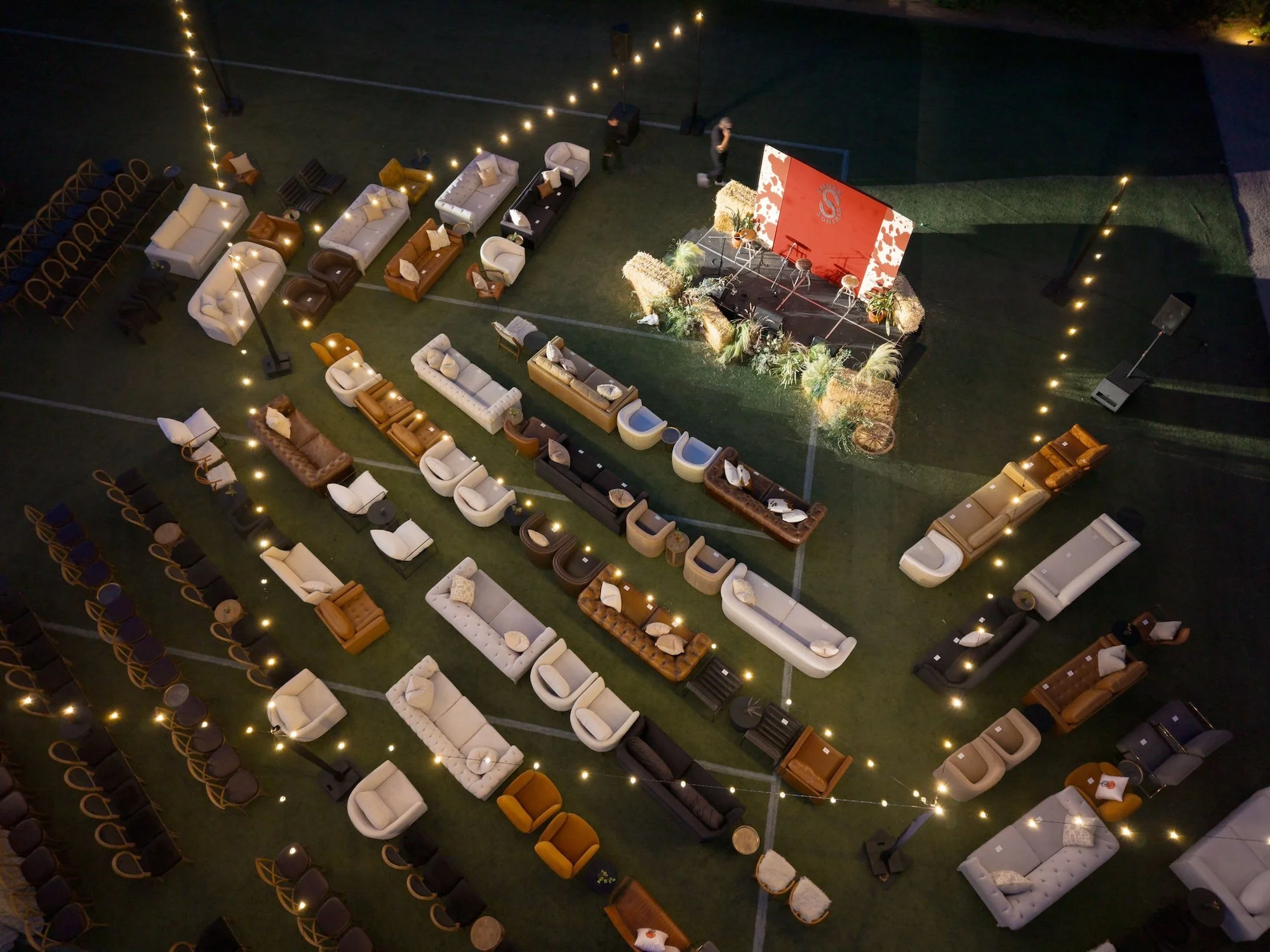
Photo: Nathan George
Prim Event Rentals is a specialty wedding and event rental company serving the Southwest — Arizona, New Mexico, Nevada, Texas, California, and beyond. Browse our full collection at primrentals.com or follow along on Instagram at @primrentals.